Vishal Patel
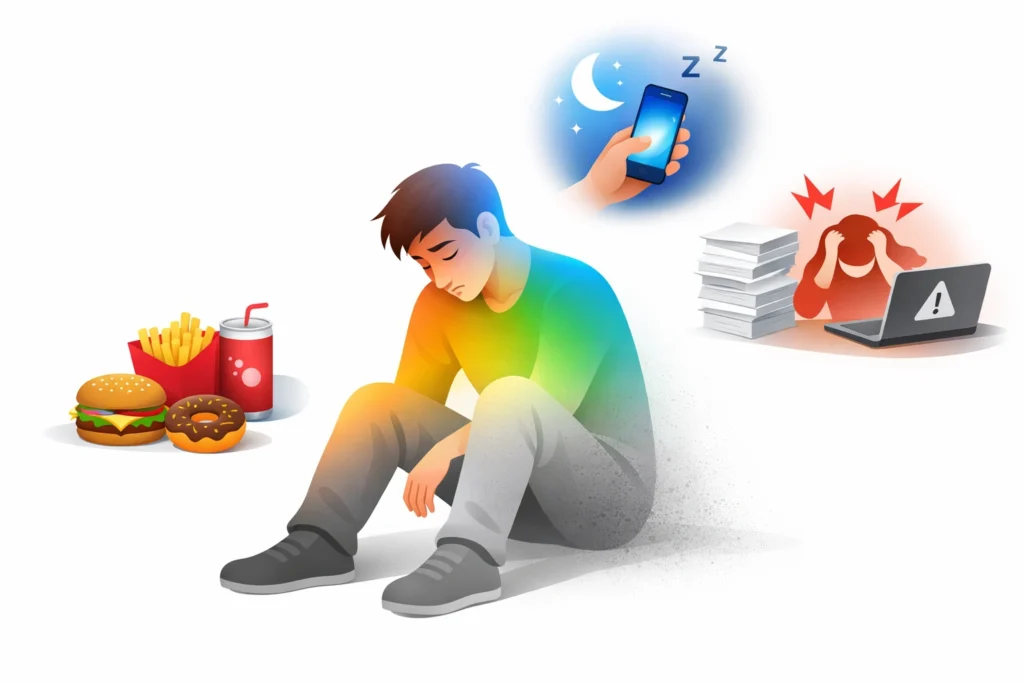
 In today’s fast-paced lifestyle, most people believe they are doing “just enough” to stay healthy. You may not be eating junk food daily, you might get some sleep, and occasionally you think about exercising. But the truth is, good health is not only about avoiding bad habits; it’s about identifying the small, hidden mistakes you repeat every single day.
These mistakes don’t show immediate damage, which is why they’re dangerous. Over time, they silently impact your energy, productivity, mental clarity, and long-term health.
If you truly want to improve your lifestyle, this blog will help you uncover those unnoticed habits and fix them with practical solutions.
1. Sitting for Long Hours Without Realizing the Damage
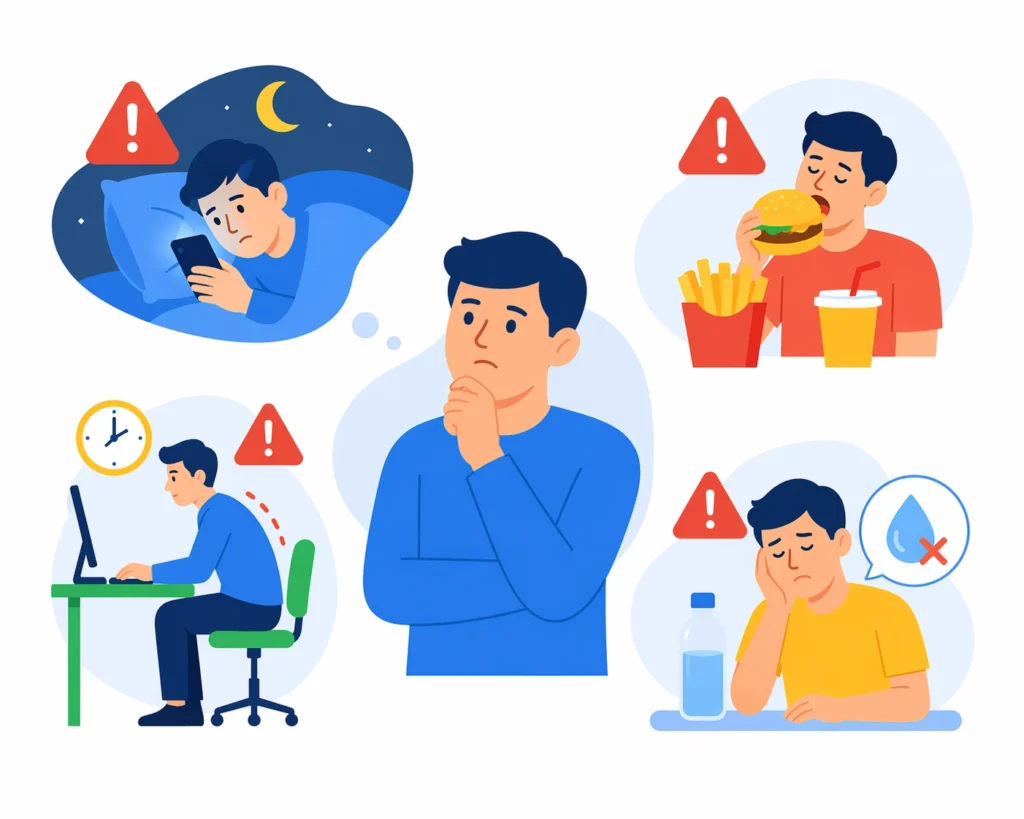
One of the most common modern-day health mistakes is prolonged sitting. Whether you’re working on a laptop, scrolling on your phone, or watching content, your body remains inactive for hours.
Even if you exercise for 1 hour daily, it does not completely offset the negative effects of sitting for 8–10 hours.
What it leads to:
- Poor posture and back pain
- Slower metabolism
- Increased fat accumulation
- Weak muscle activation
What you should do:
- Take a short break every 30–45 minutes
- Stand, stretch, or walk for 2–3 minutes
- Use stairs instead of lifts whenever possible
- Try working in a standing position occasionally
Movement throughout the day is more important than a single workout session.
2. Not Drinking Enough Water
Most people think drinking tea, coffee, or juice is enough. But your body needs plain water to function efficiently.
Dehydration is a hidden issue that affects both physical and mental performance.
Signs of dehydration:
- Low energy and constant fatigue
- Headaches
- Dry skin
- Poor concentration
Why it matters: Water helps regulate body temperature, improve digestion, support brain function, and flush toxins.
Simple fixes:
- Start your morning with 1–2 glasses of water
- Carry a water bottle everywhere
- Drink at regular intervals instead of waiting to feel thirsty
- Aim for 2.5–3 liters daily (depending on your activity level)
3. Poor Sleep Quality (Even If You Sleep 7–8 Hours)
Many people believe that sleeping for 7–8 hours is enough. But sleep quality matters more than sleep duration.
Scrolling on your phone before bed, irregular sleep timings, and late-night eating disturb your sleep cycle.
Effects of poor sleep:
- Reduced focus and productivity
- Hormonal imbalance
- Increased cravings and weight gain
- Weak immune system
How to improve sleep:
- Maintain a fixed sleep schedule
- Avoid screens at least 30 minutes before bedtime
- Keep your room dark and cool
- Avoid heavy meals late at night
Remember, sleep is not just rest; it’s when your body repairs and recovers.
4. Overeating “Healthy” Foods
A common misconception is that healthy food can be eaten in unlimited quantities. This is not true.
Even nutritious foods can cause weight gain and health issues if consumed in excess.
Examples:
- Dry fruits are healthy but high in calories
- Fruit juices contain high sugar without fiber
- “Healthy snacks” can still be processed
What to focus on:
- Portion control
- Balanced meals with protein, fiber, and healthy fats
- Eating slowly to avoid overeating
Mindful eating is more important than just choosing healthy foods.
5. Ignoring Daily Stress
Stress has become a normal part of life, especially for working professionals and business owners. But ignoring stress can seriously damage your health.
Hidden effects of stress:
- Weak immunity
- Digestive issues
- Anxiety and mental fatigue
- Sleep disturbances
What you can do:
- Take 10–15 minutes daily for yourself
- Practice deep breathing or meditation
- Reduce unnecessary screen time
- Set clear boundaries between work and personal life
Managing stress is not optional; it’s essential for long-term health.
6. Depending Too Much on Quick Fixes
Energy drinks, supplements, and shortcuts are often marketed as solutions to health problems. But in reality, they only provide temporary relief.
Mistakes people make:
- Skipping meals and relying on supplements
- Using caffeine to fight fatigue
- Expecting instant results without consistency
Better approach:
- Focus on basics: proper diet, sleep, and movement
- Use supplements only when necessary and recommended
- Build habits instead of relying on hacks
Consistency always beats shortcuts.
7 Proven Daily Habits of Highly Successful
7. Skipping Regular Health Checkups
Most people only visit a doctor when they feel sick. But many health conditions develop silently without noticeable symptoms.
Common unnoticed issues:
- High blood pressure
- Diabetes
- Cholesterol imbalance
Why checkups matter: Early detection helps prevent serious complications and keeps you in control of your health.
What to do:
- Get a basic health checkup once a year
- Monitor key parameters like sugar, BP, and cholesterol
- Don’t ignore small warning signs
Prevention is always better than treatment.
8. Lack of Physical Activity (Even Without Realizing It)
Many people assume daily tasks like walking at home or the office are enough. But your body needs intentional physical activity.
Impact of inactivity:
- Muscle weakness
- Poor stamina
- Weight gain
- Reduced flexibility
Simple improvements:
- Walk at least 6,000–8,000 steps daily
- Include basic exercises like stretching or bodyweight workouts
- Stay active even on busy days
Your body is designed to move, not sit all day.
9. Constant Screen Exposure
From mobile phones to laptops, your screen time is probably higher than you realize.
Problems caused by excessive screen time:
- Eye strain and headaches
- Poor posture
- Mental fatigue
- Reduced attention span
How to reduce impact:
- Follow the 20-20-20 rule (every 20 minutes, look at something 20 feet away for 20 seconds)
- Limit unnecessary scrolling
- Avoid screens before bedtime
Digital discipline is becoming essential for modern health.
Final Thoughts
The biggest health problems don’t come from major mistakes; they come from small habits repeated daily.
You don’t need extreme diets or intense workout plans to stay healthy. What you need is awareness and consistency.
Start by fixing just 2–3 of these mistakes:
- Drink more water
- Move more during the day
- Improve your sleep
- Manage stress
Over time, these small changes will create a massive impact on your health, energy, and overall life quality.